Summary
Omniretail operates a distribution network connecting FMCG manufacturers to thousands of informal retailers across Nigeria. Manufacturers had no unified view of their distribution operations,order volumes, distributor performance, stock positions, and settlement data lived in separate tools, spreadsheets.
I led the design of the Manufacturer Operating System: a web platform giving manufacturers and their field teams a single source of truth across their entire distribution chain. The work covered discovery, system architecture, interaction design, and a full UI build across five core modules.
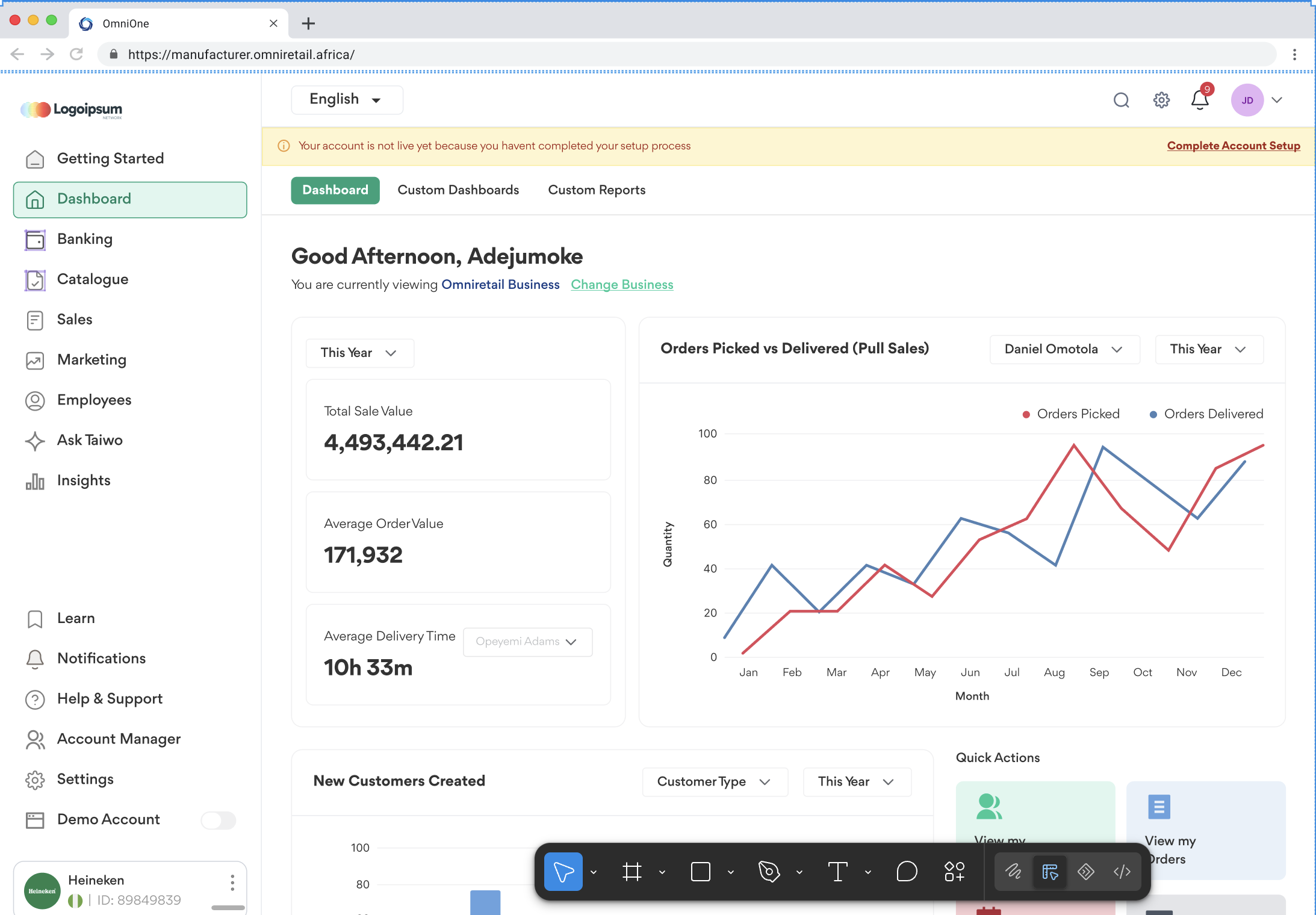 Image — Dashboard home state
Recommended: 1600 × 900px · PNG or WebP
Image — Dashboard home state
Recommended: 1600 × 900px · PNG or WebP
About Omniretail
Omniretail's distribution platform serves as the connective layer between manufacturers and the last-mile — the open-market retailers who make up the majority of Nigeria's FMCG sales. Manufacturers plug into the network to distribute stock, manage field agents, and track sell-through data.
The Manufacturer Operating System is the manufacturer-facing control layer on top of this network. Before it existed, manufacturer account managers pieced together operations using a combination of Omniretail's basic portal, external spreadsheets, and daily phone calls with distributor reps. Nothing was real-time. Nothing was auditable at scale.
"We're operating one of Nigeria's largest distribution networks blind. We know something happened — we just find out two days later."
The platform needed to give manufacturers visibility, control, and confidence — without requiring them to change how their field teams fundamentally work.
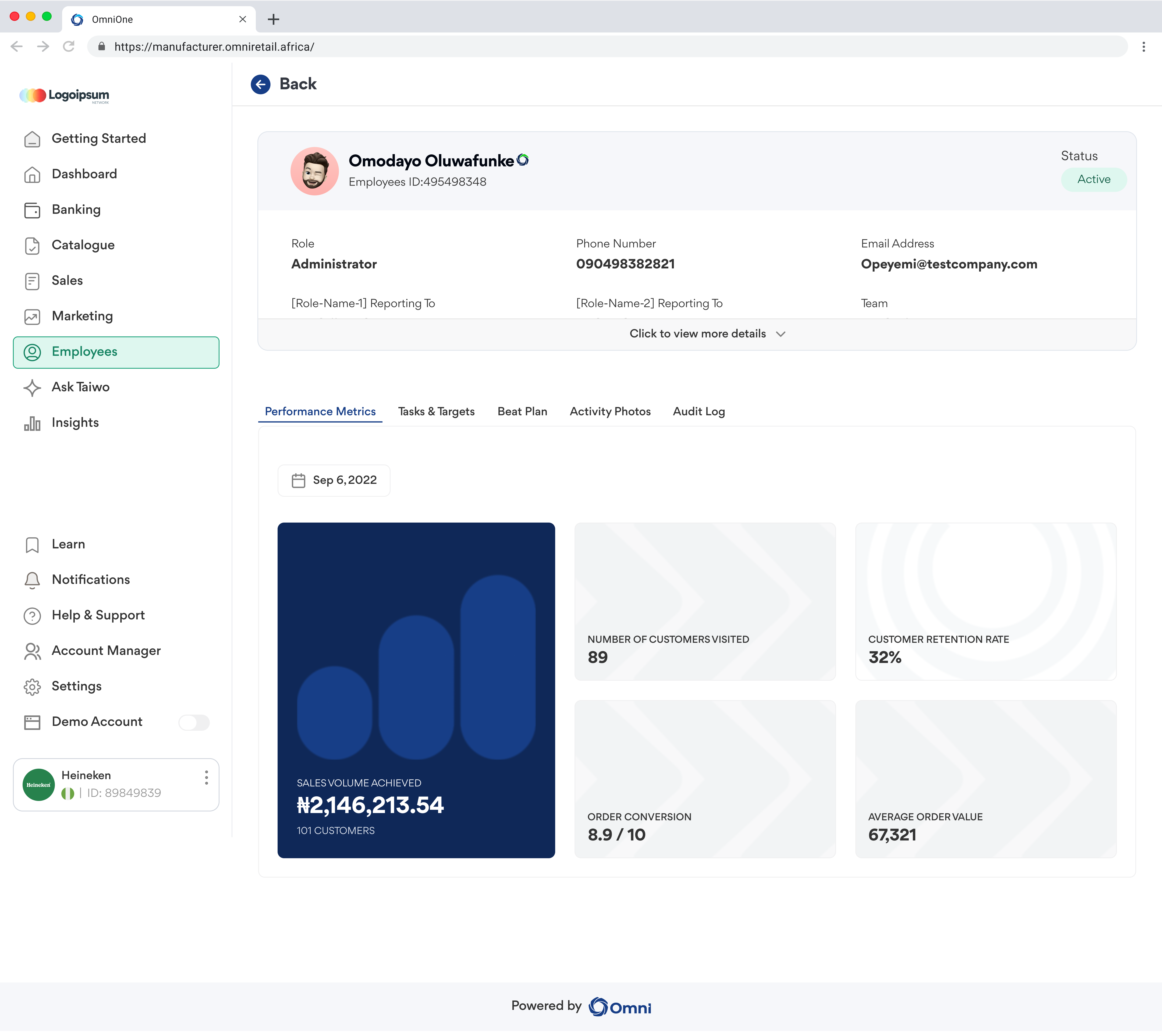 Image — Before state
Old workflow / tooling
Image — Before state
Old workflow / tooling
Starting with the operational reality
I embedded in two rounds of discovery sessions with manufacturer account managers, field supervisors, and Omniretail's operations team. The goal was to understand not just what data they needed, but the decisions they were trying to make and when those decisions broke down.
Key problems surfaced quickly:
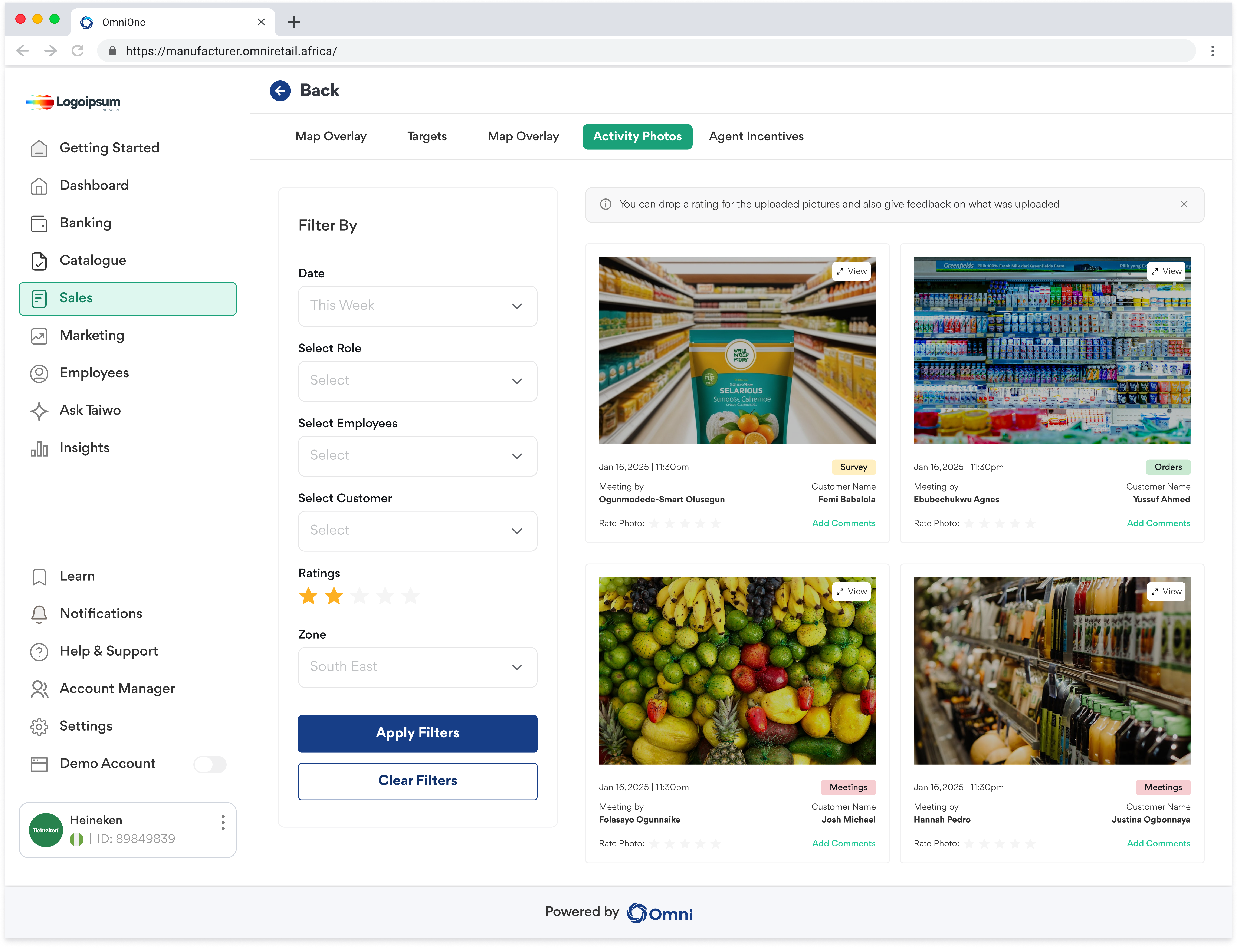 Image — Research artifacts
Interview notes, affinity map, or persona · 1600 × 900px
Image — Research artifacts
Interview notes, affinity map, or persona · 1600 × 900px
Balancing depth with usability
With five distinct problem areas and a user base ranging from data-savvy account managers to field supervisors with minimal screen time, I proposed two structural directions before committing to a solution.
Approach A — Unified dashboard with module tabs
A single authenticated workspace with a persistent left nav. Each module (Orders, Distributors, Settlements, Stock, Field Ops) lives in its own tab, sharing a common data layer and notification system. Lower learning curve; consistent mental model across user types.
Approach B — Role-based portals
Separate interfaces scoped to each user type: account managers get an analytics-heavy view, field supervisors get a mobile-first task view. Higher design and engineering complexity but more tightly tailored to individual workflows.
Approach A was approved as the Phase 1 direction, with Approach B elements earmarked for a mobile field app in Phase 2. This kept the initial engineering footprint manageable while delivering meaningful value across all user types from launch.
What we built
The OS shipped with five interconnected modules, each designed around the core decision each user type needed to make — not just the data they wanted to see.
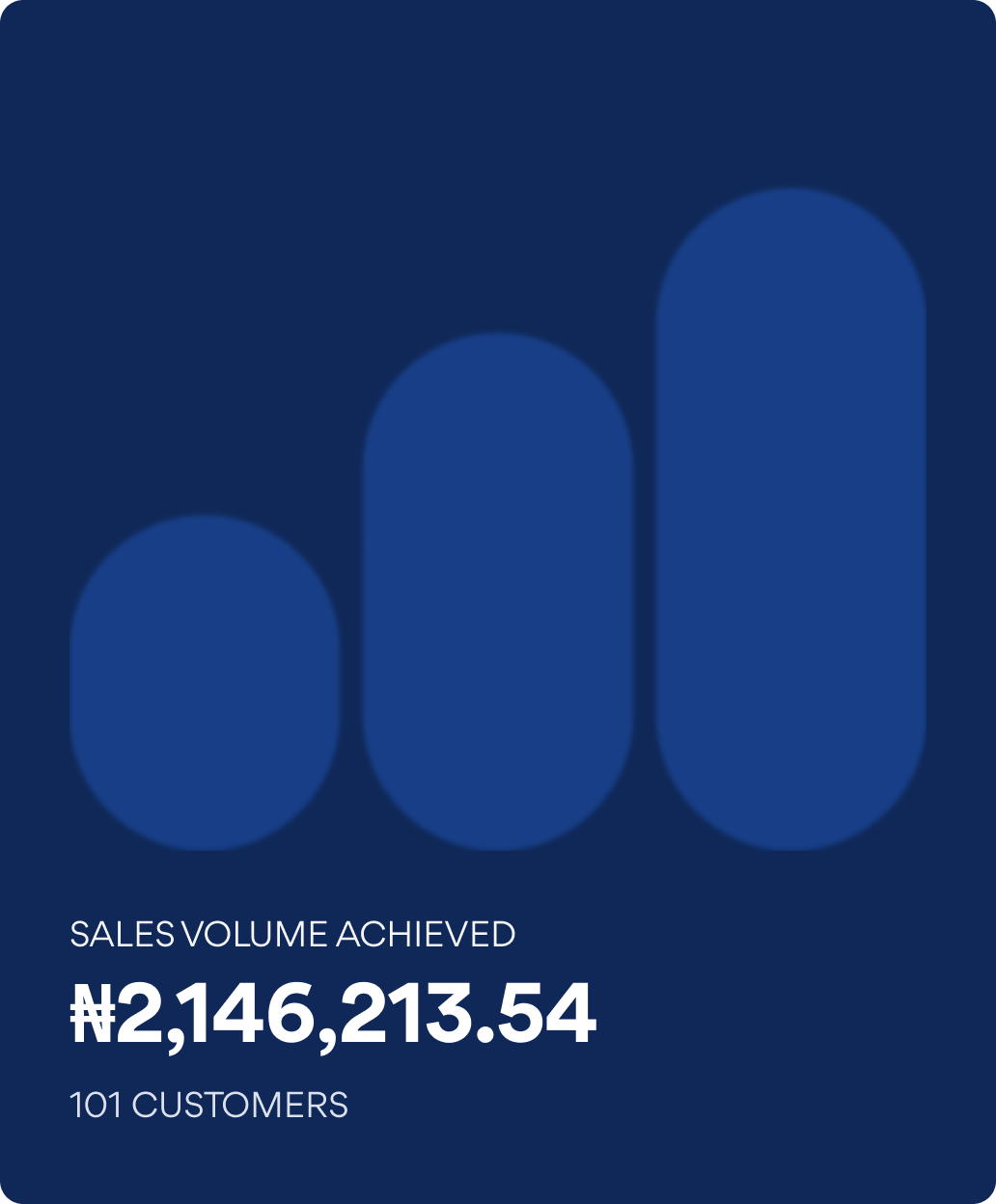 Image — Orders module
Real-time order stream UI
Image — Orders module
Real-time order stream UI
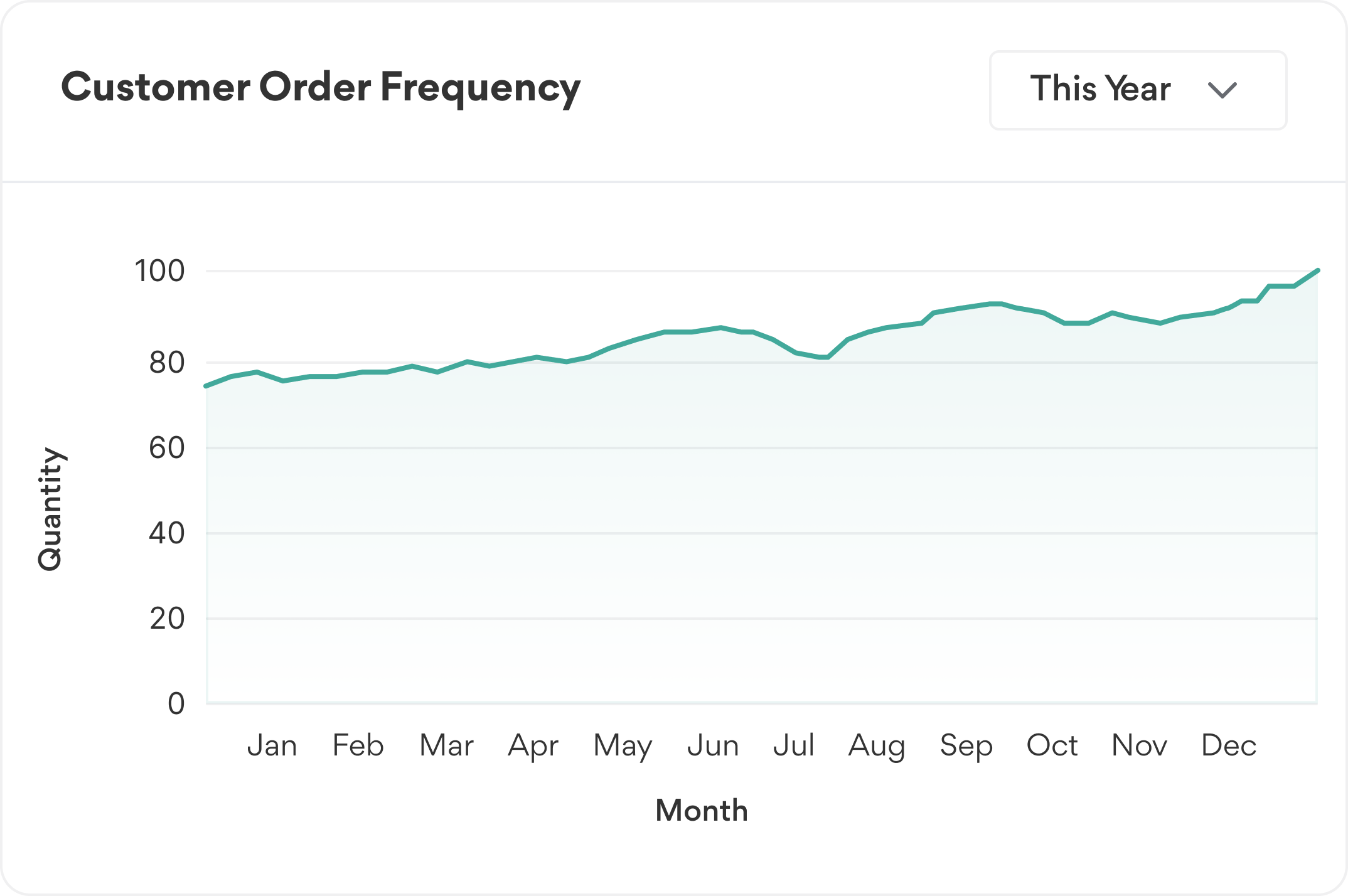 Image — Settlements or Stock Intelligence module
Full-width feature screen · 1600 × 900px
Image — Settlements or Stock Intelligence module
Full-width feature screen · 1600 × 900px
Outcomes after launch
The platform launched to three pilot manufacturer accounts in Q2, with full rollout to Omniretail's manufacturer base following a six-week stabilisation period. Key outcomes measured at the 90-day mark:
Order processing speed improved 3× end-to-end — from placement by a retailer to confirmation by the manufacturer's system. The elimination of the manual relay through distributor reps accounted for most of the gain.
Distributor dispute rate dropped 40% in the first 90 days. The settlement ledger's shared audit trail resolved the information asymmetry that caused most disputes before they escalated.
Onboarding time for new manufacturer account managers dropped 60%. A structured walkthrough sequence and contextual empty states meant new users understood the platform within their first session without training calls.
"For the first time, I can look at Monday morning and actually know what happened Friday. That's not a small thing in this market."